
Introduction
A urine routine examination is a simple yet powerful test. It helps doctors check your health in many ways. This test, also called a routine urine analysis, can show early signs of diseases. For example, it can spot kidney problems, diabetes, or infections. Because it is quick and painless, many people choose it for regular health checks. In fact, the benefits of a urine test go beyond just checking for infections. So, what does a urine test show? Let’s find out how this test can help you stay healthy.
What Is a Urine Routine Examination?
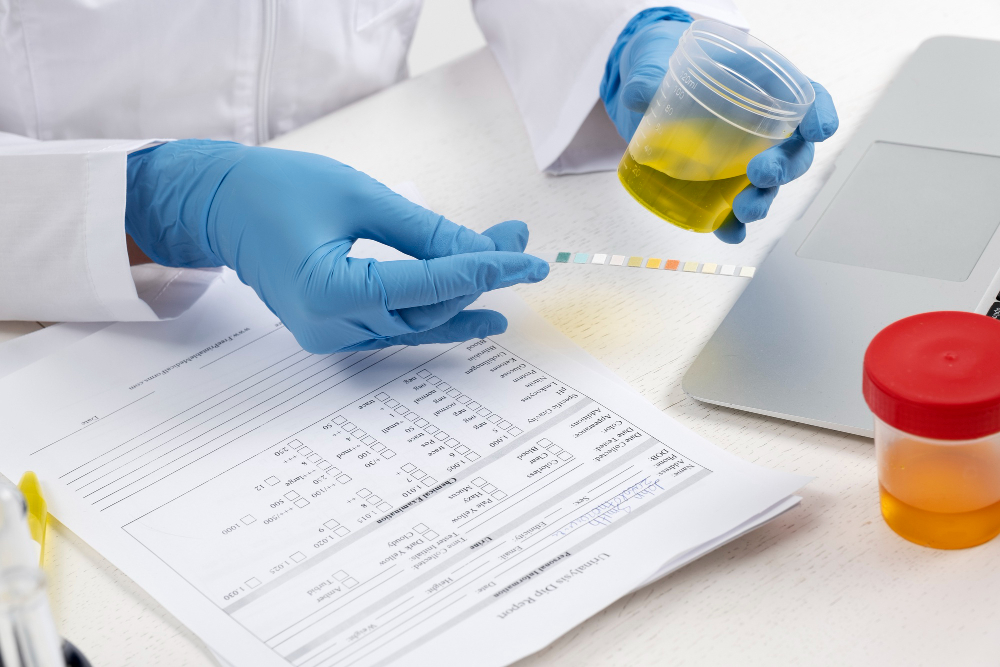
A urine routine examination is a basic lab test. It checks your urine for signs of disease or infection. During this test, your urine is looked at in three ways:
Because it is easy and fast, doctors often use it as a first step to find health problems.
Why Is a Urine Routine Examination Done?
Doctors ask for a urine routine examination for many reasons. Often, it helps find health issues early. For instance, you may need this test if you have:
Sometimes, doctors use this test to check your health during a routine check-up. In addition, it helps monitor ongoing conditions like diabetes or kidney disease. According to the CDC, urine tests are key tools for early detection of many illnesses.
How Is the Test Performed?
The urine analysis procedure is simple. First, you will get a clean container from the lab or clinic. Then, you collect a small amount of urine, usually midstream. This means you start urinating, pause, and then collect the sample. After that, you give the container back to the staff. The lab checks your urine right away or stores it safely for testing. Because the process is quick, you can return to your normal routine soon after.
What Can a Urine Routine Examination Detect?
A urine routine examination can reveal many hidden health issues. For example, it can detect:
Moreover, the test can show if your body is losing important nutrients. Sometimes, it even helps find rare conditions. Because of this, doctors trust urine routine examinations for early diagnosis.
How to Prepare for the Test
Usually, you do not need special steps before a urine test. However, to get the best results, you should:
Sometimes, your doctor may ask you to collect urine at a certain time. For example, the first urine in the morning is often best for testing.
Understanding Your Results
After the test, your doctor will explain the urine test results meaning. If your results are normal, your urine will not show signs of infection or disease. However, if something is not right, your doctor may order more tests. For instance, high sugar in urine can mean diabetes. Blood in urine may point to an infection or kidney problem. Because results can be complex, always ask your doctor for a clear explanation. The World Health Organization notes that early action based on test results can prevent serious health issues.
When to Consult a Doctor
Sometimes, you may notice changes in your urine. For example, if you see blood, have pain, or notice a strong smell, talk to your doctor. Also, if your test results are not normal, do not ignore them. Early treatment can stop problems from getting worse. In addition, regular urine tests can help manage ongoing health conditions.
Prevention and Healthy Habits
Good habits can keep your urinary system healthy. For example, you should:
Because prevention is better than cure, these habits can lower your risk of infections and other problems.
Conclusion
In summary, a urine routine examination is a simple test with many benefits. It can reveal health issues early and guide your treatment. If you have concerns or need more information, consult a healthcare specialist at Cure Pathology for personalized advice on urine routine examinations.