
What is Diabetic Neuropathy?
Diabetic neuropathy is a type of nerve damage caused by high blood sugar levels. Over time, diabetes can harm nerves, especially in your feet and hands. As a result, you may feel tingling, numbness, or pain. Early detection of diabetic nerve damage is important. With the right care, you can slow down or prevent further problems.
Why is Testing Important?
Testing for diabetic neuropathy helps find nerve damage early. When you catch it soon, you can take steps to protect your health. For example, early treatment may stop the damage from getting worse. In addition, regular testing can help your doctor adjust your diabetes care plan. According to the CDC, early testing lowers the risk of serious foot problems and infections.
Common Symptoms Leading to Testing
Many people with diabetes may not notice nerve damage at first. However, certain symptoms can signal a problem. If you have any of these, your doctor may suggest diabetic neuropathy testing:
Because these signs can be mild, regular check-ups are important. Early detection of diabetic nerve damage can make a big difference.
Types of Diabetic Neuropathy Tests
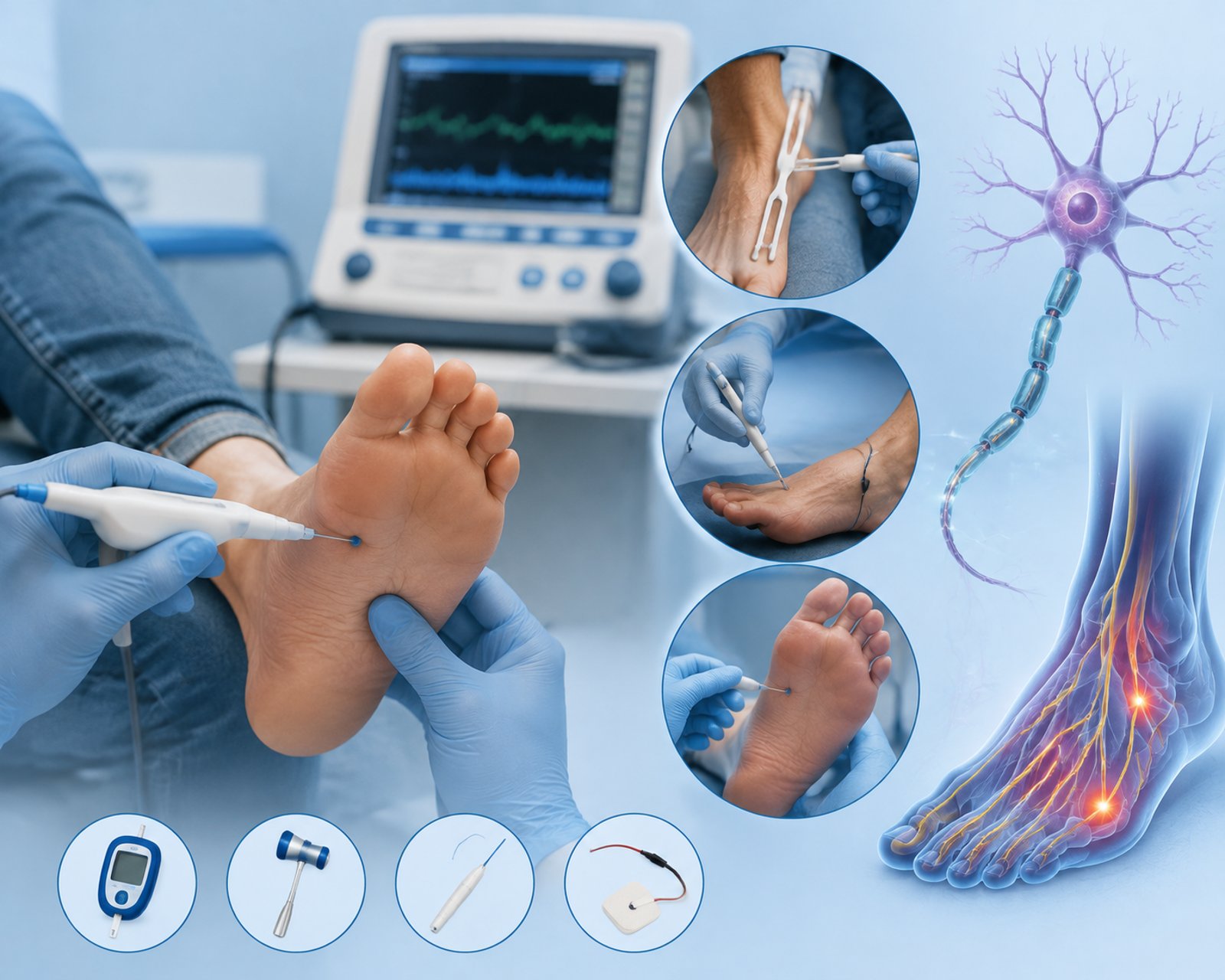
Doctors use several tests to check for nerve damage in people with diabetes. Here are some common nerve tests for diabetes:
Sometimes, your doctor may order blood tests to rule out other causes of nerve problems. Each test helps answer the question: how is diabetic neuropathy diagnosed?
How to Prepare for Testing
Preparing for diabetic neuropathy testing is simple. Most tests do not need special steps. However, you should:
Because some tests use small electrical signals, let your doctor know if you have a pacemaker or other medical devices.
What to Expect During and After Testing
Most diabetic neuropathy tests are quick and painless. For example, the monofilament and tuning fork tests take only a few minutes. Nerve conduction studies and EMG may take longer and can feel a bit uncomfortable. However, you can return to your normal activities right after most tests. Your doctor will explain each step before starting.
Understanding Your Test Results
After testing, your doctor will review the results with you. If nerve damage is found, they will discuss what it means for your health. Sometimes, results show early signs of nerve problems. In that case, your doctor may suggest changes to your diabetes care. For example, better blood sugar control can help slow nerve damage. If no nerve damage is found, regular testing is still important.
Prevention and Next Steps
Even if you have nerve damage, there are steps you can take. For instance, keeping your blood sugar in a healthy range helps protect your nerves. Also, regular foot care and check-ups are key. Your doctor may suggest medicines or physical therapy to manage symptoms. Early detection of diabetic nerve damage gives you the best chance to stay healthy.
In summary, diabetic neuropathy testing is a vital part of diabetes care. It helps you and your doctor find problems early and take action.
Consult Dr. Divakar Srivastava for personalized advice on diabetic neuropathy testing.