
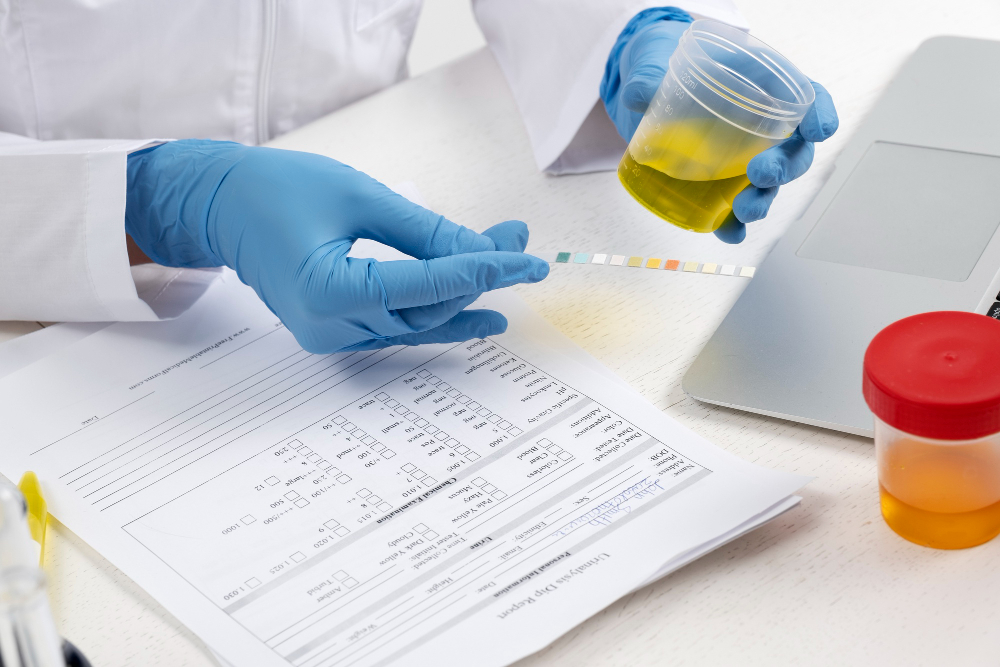
What is a Urine Routine Examination?
A urine routine examination, also called urinalysis, is a simple test. It checks your urine for signs of health problems. Doctors often use this test to find early signs of disease. Because it is quick and painless, many people have it done during regular check-ups. In fact, a urine routine examination can give important clues about your body’s health.
Why is a Urine Routine Examination Important?
Many health issues do not show symptoms right away. However, a urine routine examination can spot these problems early. For example, it can help find infections, kidney issues, or diabetes. Early detection means you can get treatment sooner. As a result, you may avoid serious health problems later. According to the CDC, regular urine tests help keep track of your overall health.
How is the Test Performed?
Getting a urine routine examination is easy. Usually, you will follow these steps:
Most clinics in your city or region offer this test. The process is quick and does not cause pain. In many cases, you can return to your daily activities right away.
What Can a Urine Routine Examination Detect?
This simple test can reveal many things about your health. For instance, it can detect:
Because a urine routine examination checks for many issues, it is a valuable tool. Doctors use it to monitor ongoing health conditions as well. If you are wondering what does a urine test detect, the answer is: much more than you might think.
How to Prepare for a Urine Routine Examination
Most people do not need special steps before a urine routine examination. Still, you can follow these tips for the best results:
Sometimes, your doctor may ask you to avoid certain activities before the test. Always check with your clinic if you have questions about how urine tests work.
Understanding Your Results
After the test, you will get your urine test results. These results show if anything unusual was found. For example, the test looks at:
If your results are normal, that is good news. However, if something is off, your doctor may order more tests. Sometimes, small changes do not mean a serious problem. But it is always best to discuss your results with a healthcare professional.
Frequently Asked Questions
Conclusion and Next Steps
In summary, a urine routine examination is a simple yet powerful test. It can reveal hidden health problems early. Because it is quick and easy, many doctors recommend it for regular health checks. If you have questions about urine test benefits or your results, talk to your doctor. Consult a healthcare professional at Cure Pathology for personalized advice about urine routine examinations.