
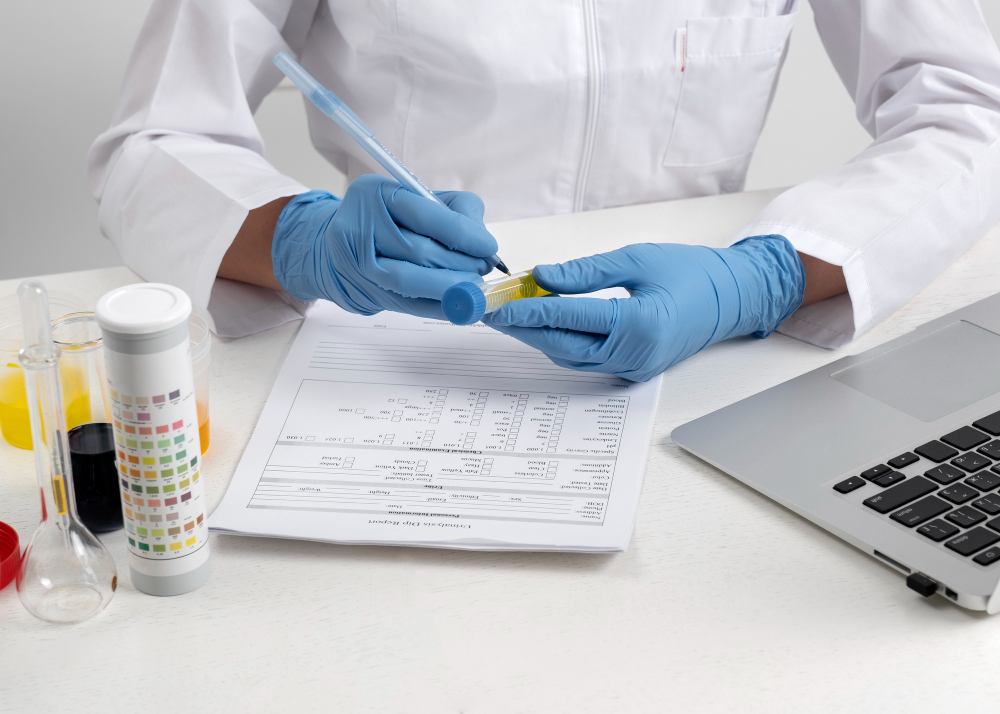
What is VMA 24 HRS URINE?
The VMA 24 HRS URINE test checks for vanillylmandelic acid (VMA) in your urine. VMA is a substance made when your body breaks down certain hormones called catecholamines. These hormones help control your heart rate, blood pressure, and stress response. The test collects all your urine over 24 hours. Because of this, it can give a clear picture of how much VMA your body makes in a day. Doctors use this test to help find certain rare tumors or check hormone levels.
Why is the VMA 24 HRS URINE test done?
Doctors order the VMA 24 HRS URINE test for several reasons. Most often, it helps check for tumors called pheochromocytoma or neuroblastoma. These tumors can make extra catecholamines. As a result, your VMA levels may rise. Sometimes, the test helps monitor treatment or check if a tumor has come back. In addition, it can help explain symptoms like high blood pressure, headaches, or sweating that do not have a clear cause.
How is the VMA 24 HRS URINE test performed?
The VMA urine test is simple but takes a full day. First, your doctor will give you a special container. You will collect all your urine for 24 hours. Usually, you start in the morning. You empty your bladder and do not save this first urine. After that, you collect every drop of urine for the next 24 hours, including the first urine the next morning. Store the container in a cool place, often in a refrigerator. Once the collection is done, you return the container to the lab. The lab then measures the vanillylmandelic acid in your urine.
Preparing for the VMA 24 HRS URINE test
Proper preparation helps ensure accurate results. Your doctor may ask you to avoid certain foods and medicines before the test. For example, some foods can raise VMA levels. In addition, some medicines may affect the results. Always follow your doctor’s instructions closely.
If you have questions about what to avoid, ask your healthcare provider.
What do VMA 24 HRS URINE test results mean?
After the test, your doctor will review your VMA urine test results. Normal VMA levels can vary by age and lab. High VMA levels may suggest a tumor like pheochromocytoma or neuroblastoma. However, other conditions or foods can also raise VMA. On the other hand, low or normal results usually mean no extra hormone production. Still, your doctor will look at your symptoms and other test results before making a diagnosis. According to the National Institutes of Health, normal VMA levels for adults are usually less than 13.6 mg per 24 hours, but this can differ by lab.
Risks and considerations
The VMA 24 HRS URINE test is safe and noninvasive. However, collecting urine for 24 hours can be inconvenient. Sometimes, missing a sample or not following food restrictions can affect the results. Because of this, it is important to follow instructions carefully. There are no physical risks from the test itself.
Frequently asked questions (FAQs)
Conclusion and next steps
In summary, the VMA 24 HRS URINE test helps doctors check for certain rare tumors and hormone problems. The test is safe and easy to do at home, but it requires careful collection. If your doctor orders this test, follow all instructions for the best results. For any questions or concerns, consult Dr. Divakar Srivastava at Cure Pathology for personalized advice about your VMA 24 HRS URINE test.